
ZYLENTIX
Product-specific vulnerability decisions for regulated MedTech
ZYLENTIX helps MedTech product-security teams assess identified vulnerabilities against the medical device and the infrastructural context - while keeping evidence, reasoning, remaining uncertainty and review status connected to every decision.
Who It Is For
Regulated medical-device manufacturers that need consistent product-specific vulnerability decisions across complex and long-lived device portfolios.
Problem
Teams must evaluate findings against the actual device architecture and configuration, often with incomplete evidence and limited testing options.
At the same time, every decision must remain understandable and reviewable over time.
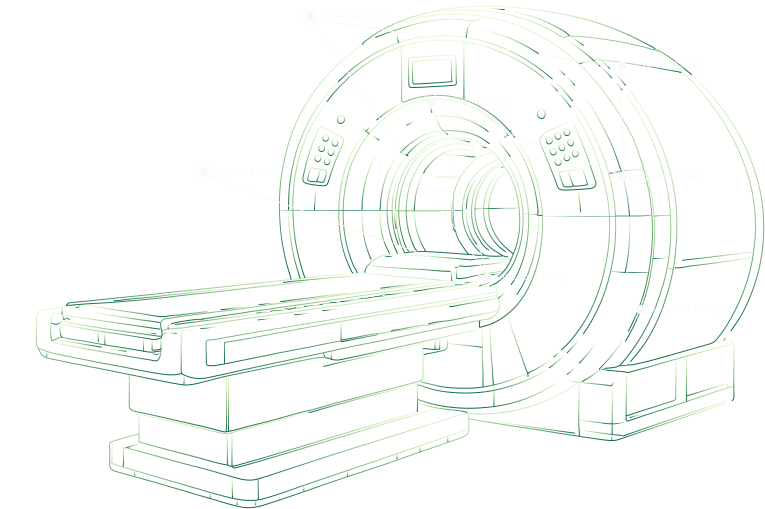
Illustrative product-context view of a medical device with identified CVEs. Each finding still needs to be assessed against the specific device, configuration and available evidence.
Solution
Implementation
ZYLENTIX starts with the product-security evidence already available, including:
- Product configuration
- Technical documentation
A complete product model is not required from day one. The assessment remains bound by the available information.
Decision Record
Each evaluation creates a reviewable vulnerability decision record containing:
- Assessment status
- Product-specific reasoning
- Remaining uncertainty
- Supporting evidence
- Structured VEX output
Action
& Outcome
ZYLENTIX helps teams evaluate vulnerabilities even when product evidence is incomplete or requires further review.
Results
- Assess vulnerabilities in product context instead of treating every CVE match equally
- Make decisions traceable and reviewable by connecting conclusions, evidence and reasoning
- Support secure deployment planning across access control and data handling
Start with a defined product or product line.
Request a product-line evaluationWhy now?
MedTech vulnerability decisions are lifecycle work.
Regulatory Pressure
Requirements such as FDA, Section 524B and European MDR/IVDR increase the need for structured and traceable cybersecurity processes.
Long-lived products
Devices remain in the field for years while vulnerability intelligence, supplier information and available evidence continue to change.
Review Pressure
Decisions must remain understandable after the original assessment — including the evidence used, the reasoning applied and the uncertainty that remained.